

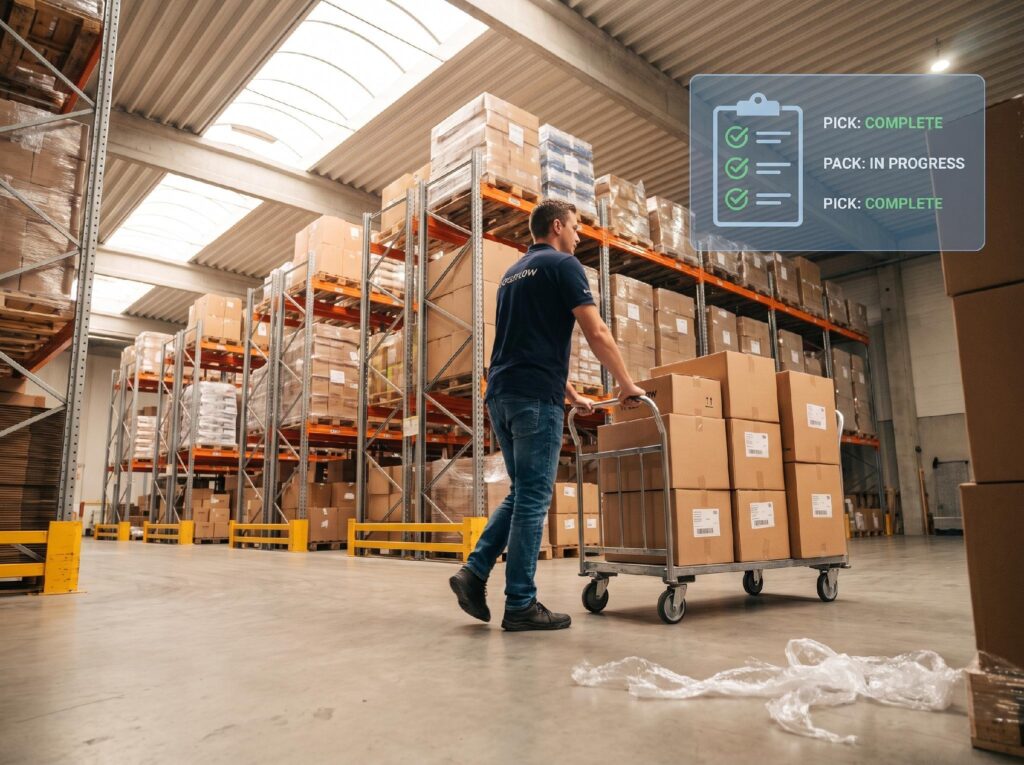
Let’s face it: a beautifully written SOP does nothing on its own once order volume triples overnight. It just sits in a shared drive while your team scrambles.
Most eCommerce brands eventually write down their fulfillment process. Someone documents how to pick, pack, and ship an order, and for a while, that document works. Then a big promotion hits, or a product goes viral, and the same process that felt airtight on paper starts breaking under real volume. U.S. e-commerce sales reached $1.2337 trillion in 2025, up 5.4% year over year and now accounting for 16.4% of total retail sales, according to the U.S. Census Bureau’s Quarterly Retail E-Commerce Sales report. That kind of growth doesn’t wait for a team to catch up manually. A written SOP tells people what to do. It doesn’t assign the task, track whether it happened on time, or flag the exception when something goes wrong. That gap between “documented” and “automated and executed” is where many scaling brands quietly lose money, and it’s the gap this article is about.
From SOP to Scenario: When to Automate vs. Outsource Fulfillment
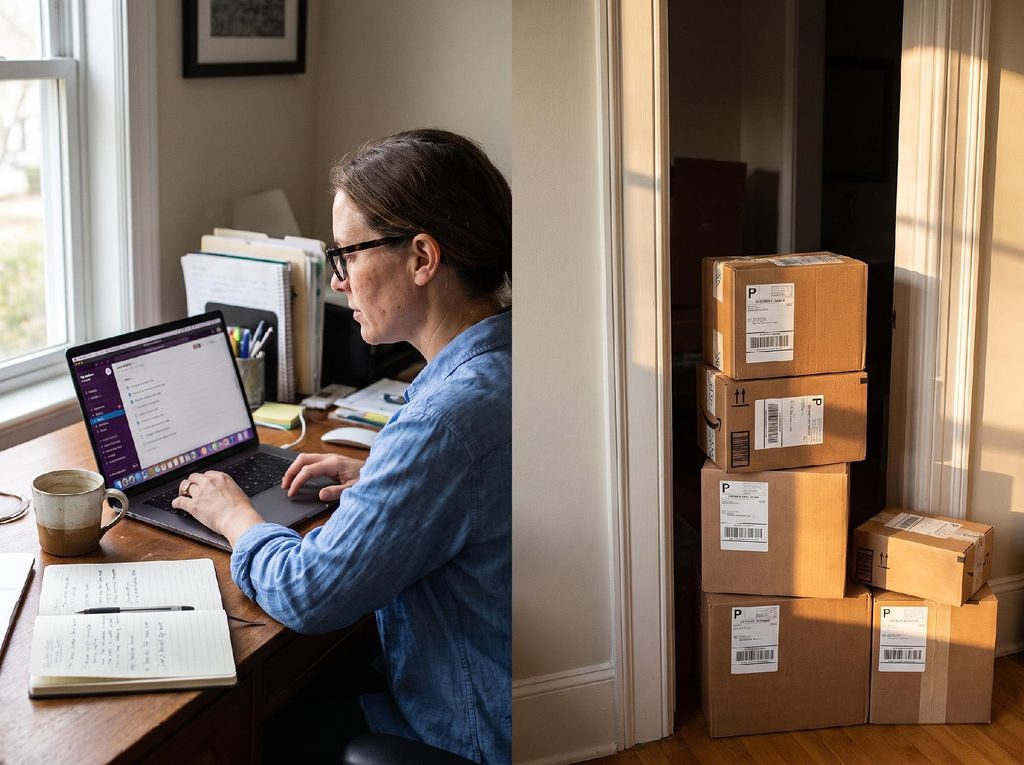
Mapping the fulfillment workflow before deciding what to automate in-house and what to hand off.
Once a brand has its fulfillment SOP mapped out, the next question isn’t “is this documented well enough.” It’s “who should actually be running this step by step.” Some parts of the process, like approving a return or updating a customer, make sense to keep in-house with automated task assignment and notifications. Other parts, like physically picking, packing, and shipping thousands of orders a week, don’t scale well inside a spare room or a rented unit with three part-time staff.
Picture a DTC skincare brand that spent months building out its fulfillment SOP: order intake, quality checks, packaging standards, shipping cutoffs. The documentation was solid. What broke was execution, once order volume outgrew the two-person warehouse team fulfilling everything by hand. The brand kept its process and oversight layer in-house, tracking every step through its own workflow tool, but handed the physical pick-pack-ship work to a partner like Merchdrop 3PL, which specializes in eCommerce fulfillment logistics. The SOP didn’t disappear. It just got split: the decision logic stayed internal, and the physical execution moved to a team built for volume. That’s a strategy, not a compromise. It’s also increasingly the norm; 84.13% of brands now use a third-party fulfillment company for at least some of their orders, according to ShipBob’s State of Order Fulfillment Report 2026 Edition.
The Real Cost of Manual, Undocumented Processes
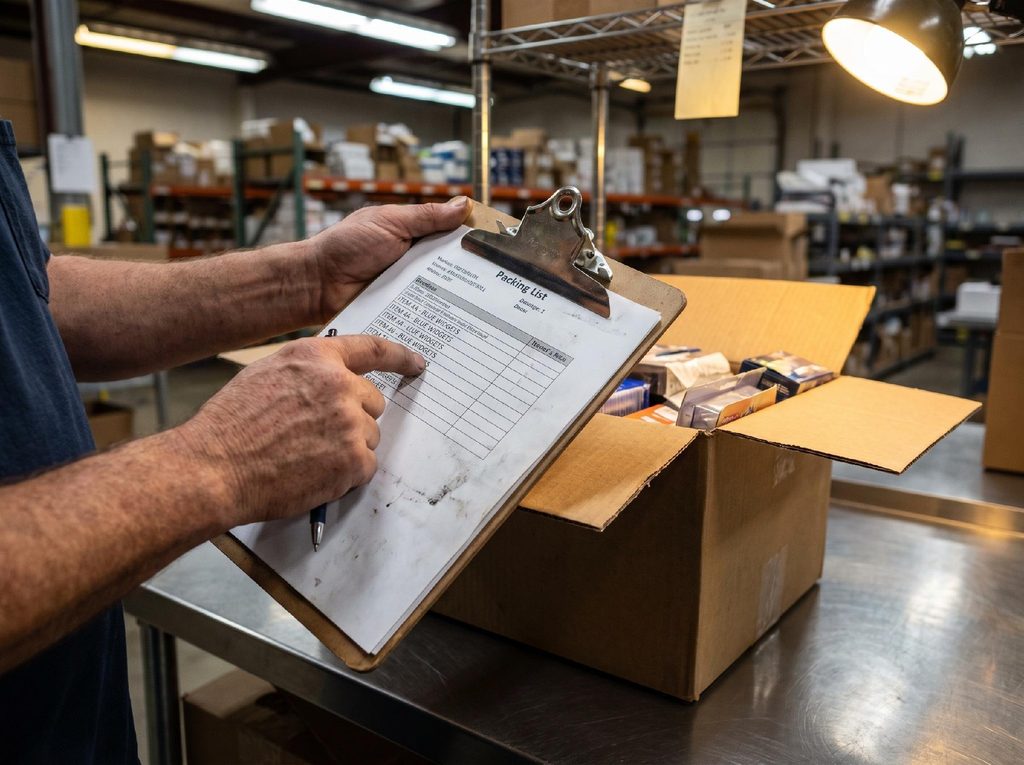
Manual, undocumented fulfillment steps are where errors and returns start.
Skip the automation step and the costs show up fast, usually in places you don’t notice until the numbers pile up. Pick-and-pack errors cost an average of $35 per incident, while top-tier 3PLs run closer to a 98.5% order accuracy rate, per ShipBob’s 2026 report. Multiply that error rate across a few thousand orders a month and it stops looking small.
Returns make the math worse. The National Retail Federation projects retailers will absorb close to $850 billion in returned merchandise in 2025, with ecommerce return rates hitting 19.3%, according to its 2025 Customer Returns in the Retail Industry report. A wrong item, a mislabeled box, or a missed shipping cutoff doesn’t just cost the price of a reship. It generates a support ticket, a refund, and often a customer who won’t order again. None of that shows up as a single line item, which is exactly why so many brands underestimate it until margins start slipping.
Automating the Workflow, Not Just Documenting It
A static SOP document can’t flag an exception, reassign a stuck task, or trigger a follow-up email when a shipment is delayed. A living, automated workflow can. Conditional logic routes an order down a different path when inventory runs low. Task assignment moves a step to the next available team member instead of sitting in someone’s inbox. Recurring triggers reorder packaging supplies before the shelf actually goes empty. This is a different way of running the process, not just a nicer way of writing it down.
The upside is measurable. 73% of IT and operations leaders report automation saves about 50% of process time, and roughly 30% of business leaders report reduced labor costs from process automation, according to FlowForma’s Business Process Automation Statistics 2026. We’ve written before about why order fulfillment needs its own SOP in the first place, and about the modern SOP-building tools that make turning that document into an actual workflow far less painful than it used to be. The step most brands skip is connecting the two: writing the SOP is planning, automating it is running the business.
Choosing the Right Tools for Growth
Workflow software solves the internal process problem. Inventory and shipping platforms solve the execution-tracking problem. But scaling brands also need visibility into how they stack up against the competition, both operationally and on the marketing side that drives the orders in the first place. Benchmarking tools matter here as much as fulfillment tools do; a brand that automates its warehouse but has no idea how its site, pricing, or ad strategy compares to competitors is still flying half-blind. Resources like Heroic Rankings’ guide to the best competitor analysis tools are worth a look when you’re deciding which platforms actually earn a seat in your tech stack instead of collecting a subscription fee nobody checks.
None of this tooling investment makes sense without the growth to justify it, and that growth keeps arriving. With U.S. e-commerce sales already past $1.2 trillion and still climbing, according to the Census Bureau’s most recent data, the brands that treat operational tooling as optional now are the ones that will be rebuilding their fulfillment process under pressure later. Better to pick the stack while there’s still time to test it. The Small Business Administration’s guidance on managing operations makes a similar point: knowing when to bring in an outside partner is part of running the business, not a sign you’ve lost control of it.
Building KPIs Into Your Automated Workflow
An automated workflow is only as useful as the metrics built into it. Pick accuracy, on-time-in-full delivery, and return processing time shouldn’t live in a separate spreadsheet someone updates on Fridays. They need to sit inside the workflow itself, so an exception gets flagged the moment it happens rather than three weeks later in a customer complaint. We’ve covered why documenting processes before scaling matters so much for small brands specifically, and KPIs are the piece that turns that documentation into an early warning system instead of a historical record.
Set a threshold for each KPI and let the workflow raise a flag automatically when a number drifts outside it. That’s the difference between finding out about a fulfillment problem from an angry customer and finding out from your own dashboard first.
Conclusion
Writing the SOP was never the finish line. It’s the starting point for a decision every scaling brand eventually has to make: automate the process internally, hand physical execution to a partner built for volume, or some mix of both. Brands that treat documentation as the whole solution keep running into the same wall once order volume grows past what a small team can manually track. The ones that turn that documentation into an automated, measurable workflow, and know when to bring in outside execution help, are the ones that scale without their operations falling apart in the process.